
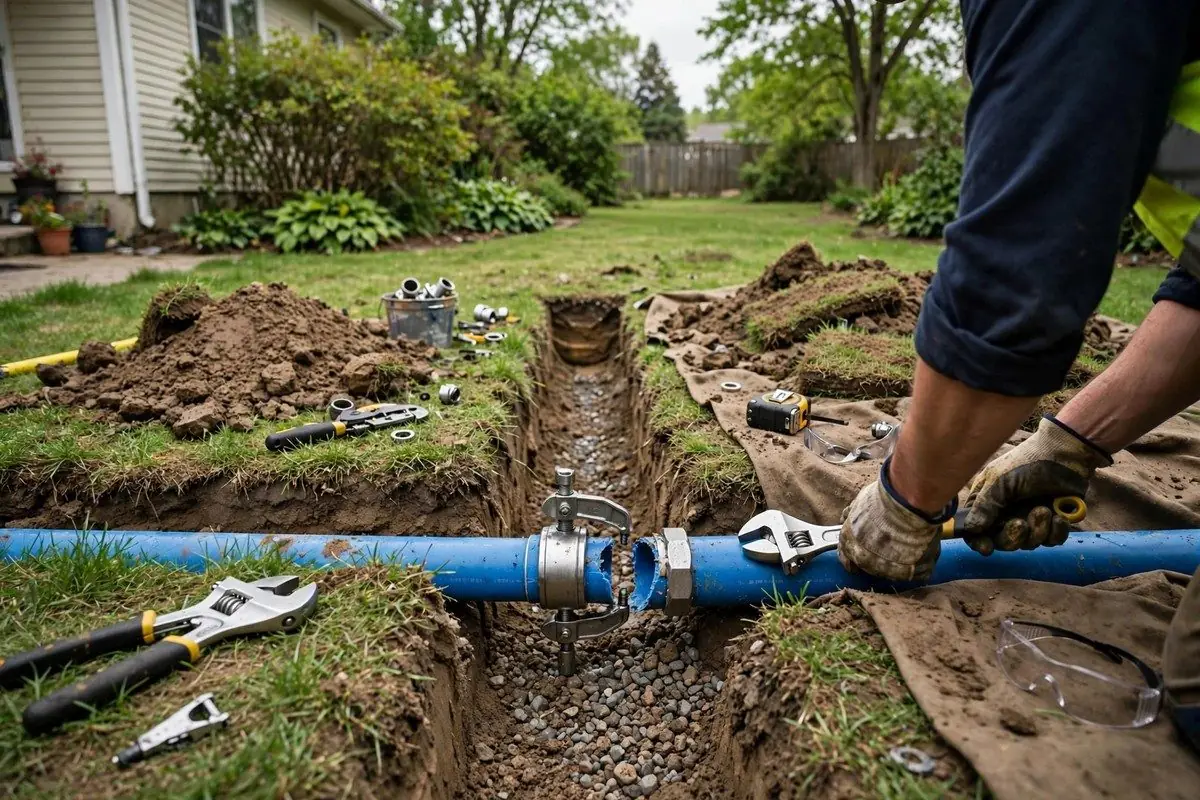
A wet yard with no rain usually means a service line leak
The water service line carries water from the utility meter to your home. It runs underground, often for dozens of feet, and it can leak for weeks before anything shows. A soft patch of lawn, a sinkhole or a sudden drop in pressure are common first signs.
If water is surfacing or flooding, shut off the valve at your meter or at the house. Then call. We can confirm whether the line is the source and what repair options fit.
Repair a section or replace the line
Both are real options. The right one depends on the pipe and how much of it is failing.
Repair one section
- One break or joint is the clear cause
- The pipe is otherwise sound
- Access is easy and the dig is short
- The material is not known for repeated failure
Replace the line
- Repeated leaks along the same line
- Old galvanized, lead or brittle plastic pipe
- Low pressure from corrosion inside the pipe
- Digging once is more practical than digging again
How a service line job goes
- 1
Confirm the line is leaking
A meter test and a look at the yard separate a line leak from a leak inside the house.
- 2
Locate the break
We trace the line and find the failure point.
- 3
Plan the repair
We explain the options, any permit needs and call 811 before digging.
- 4
Repair and test
We make the repair, restore pressure and check for leaks.
Water in the yard?
Call and describe where it is showing. We will tell you where the shutoff is likely to be.
What affects the cost of a service line repair
The price is given before work starts.
Telling a service line leak from an indoor leak
Close every fixture and check the meter. If it still moves, water is escaping somewhere. A damp yard points to the buried line. A stain on a ceiling or a warm spot on a slab points inside, and leak detection finds it without opening walls.
If a pipe has already burst indoors, burst pipe repair is the faster page. If the line has also clogged on the sewer side, see sewer line repair.
Signs the line is aging
A service line that is old can show warning signs before it fails. Reduced pressure, a meter that creeps when the house is quiet and damp spots in the yard are common. In older homes, the line may be galvanized or another material that corrodes inside and narrows the flow.
If your line is old and you are already digging for a repair, replacing a longer section at the same time can save a second excavation. We explain the options after we see the line.
What to tell us on the phone
- Where you see water or wet ground
- Whether the meter moves with the house valve closed
- Age of the house and any known line replacement
- Whether pressure has dropped
- Where the main shutoff is
- Whether you have called 811 before any digging
Who handles what between the meter and your house
The City of Bothell serves about 8,500 households and businesses with water purchased from Seattle Public Utilities, and four water districts serve parts of the city. The City FAQ says homeowners are responsible for all repairs beyond the water meter, including the service line to the home.
The City report notes that lead in drinking water comes mainly from service lines and home plumbing, and that homes with older lines should flush the tap after the water has sat. If your line is old, replacement is worth discussing. Call 811 at least two business days before any digging so buried utilities are marked.
Service line work follows the Uniform Plumbing Code (UPC) as adopted in WAC 51-56. Washington law also requires you to call 811 at least two business days before digging (RCW 19.122).
Water service line questions
Yes. Our line is open 24 hours a day, every day. Call (425) 845-0257. If water is flooding, shut off the valve at the meter or house first.
A wet or soft spot in the yard, a meter that moves with the house shutoff closed and a sudden pressure drop all point there. A meter test confirms it.
Some work on water lines needs a permit. Ask the Bothell Permit Center or let us tell you what we are filing for your address.
Yes, at least two business days before digging. It is free and it protects you from hitting buried gas, electric and other lines.
A short repair can be done in a visit. A longer replacement takes more time. We give an estimate once we see the line.
Older homes may have older lines. The City water quality report explains that lead comes mainly from service lines and home plumbing. Ask us to check the material when we are there.