
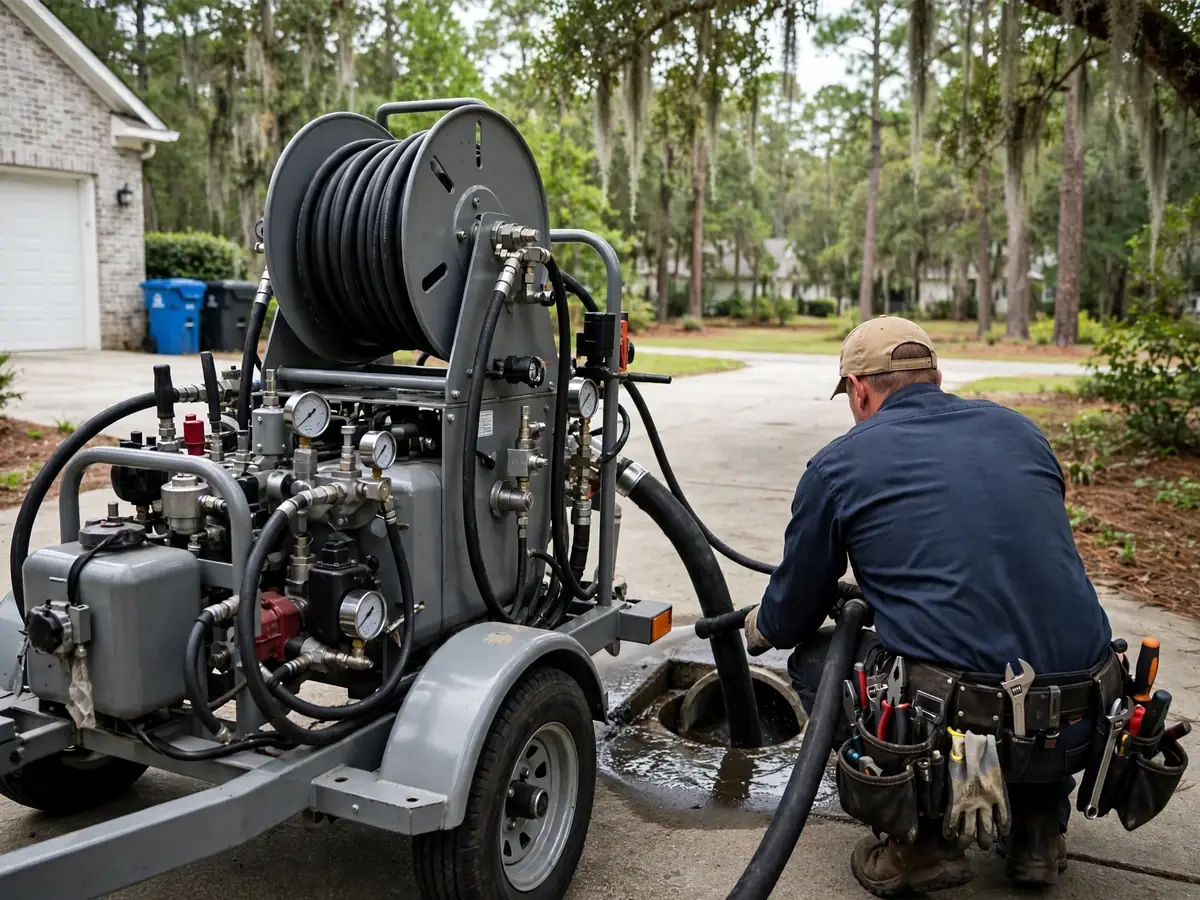
A line that keeps clogging cannot wait for a fourth snaking
Hydro jetting sends a controlled stream of water through the pipe at a pressure a cable cannot match. The nozzle scours grease, scale and soft roots off the pipe wall instead of poking a hole through the middle of them.
If you are dealing with a backup right now, call first. A plumber can tell you whether the situation needs a jetter or whether a cable will get you through the night and a jetting visit can follow.
Cable or jet: how they differ
Both are good tools. They solve different problems.
Drain cable
- Breaks through a blockage and restores flow
- Fast for hair, soap and a single clog
- Can leave a coating of grease on the pipe wall
- Cuts roots but does not wash the debris away
Hydro jetting
- Scours the full pipe wall, not just the middle
- Flushes debris downstream and out of the line
- Suited to grease, scale and packed roots
- Needs a clear cleanout and a sound pipe
Where jetting pays off
These are the situations where we reach for the jetter first.
- Kitchen drains and main lines coated with years of grease, such as restaurants and busy households
- Sewer laterals with fine roots that regrow within months of every cable visit
- Cast iron lines with heavy scale that has narrowed the pipe
- Long runs where a cable struggles to reach or turn
- Preventive cleaning after a backup, once a camera has confirmed the pipe is sound
What a jetting visit looks like
- 1
Camera first
We look at the line before any pressure goes into it. A cracked or collapsed pipe is not a jetting candidate.
- 2
Set up at the cleanout
The hose enters through a cleanout. We choose a nozzle for the type of buildup we saw.
- 3
Jet the line
The nozzle pulls itself forward and cleans on the way back, sending debris toward the main.
- 4
Camera again
A second pass confirms the pipe wall is clean and shows any damage that the buildup was hiding.
Same clog three times?
Tell us how often it has returned and what was done last time. That helps us choose the right method.
What affects the cost of jetting
We price jetting before work starts. The scope depends on the line and what is in it.
Roots, soil and old pipe around Bothell
Roots are one of the main reasons lines near the Sammamish River and around North Creek and Canyon Park slow down again after a cable visit. Fine root hairs enter at joints and thicken with every wet season.
Jetting washes them out, and a camera check shows the joint they came through. If the joint is damaged, the long fix is sewer line repair, because a jetted pipe with an open joint will fill with roots again.
Any repair a camera finds after jetting is done to the Uniform Plumbing Code (UPC) as amended in Washington under WAC 51-56.
Hydro jetting questions
Yes. Call (425) 845-0257 at any hour. If the line needs immediate relief, we may clear it with a cable first and book the jetting visit once the water is under control.
Used on sound pipe with the right nozzle and pressure, no. That is why we run a camera first. A cracked, collapsed or heavily corroded pipe should not be jetted until it has been assessed.
Most residential lines take a few hours including the camera passes. Longer runs, heavy buildup or limited access add time. We tell you what we expect once we see the line.
It removes the roots in the line, but roots grow back if the entry point is still open. A camera shows whether a joint or crack is feeding them.
Bothell addresses are generally on the public sewer, so this rarely comes up. If you are not sure how your home is connected, ask when you call.
There is no fixed schedule. A line with a history of grease or roots may benefit from periodic cleaning. A clean line with no problems does not need it. See drain cleaning for lighter-duty options.