
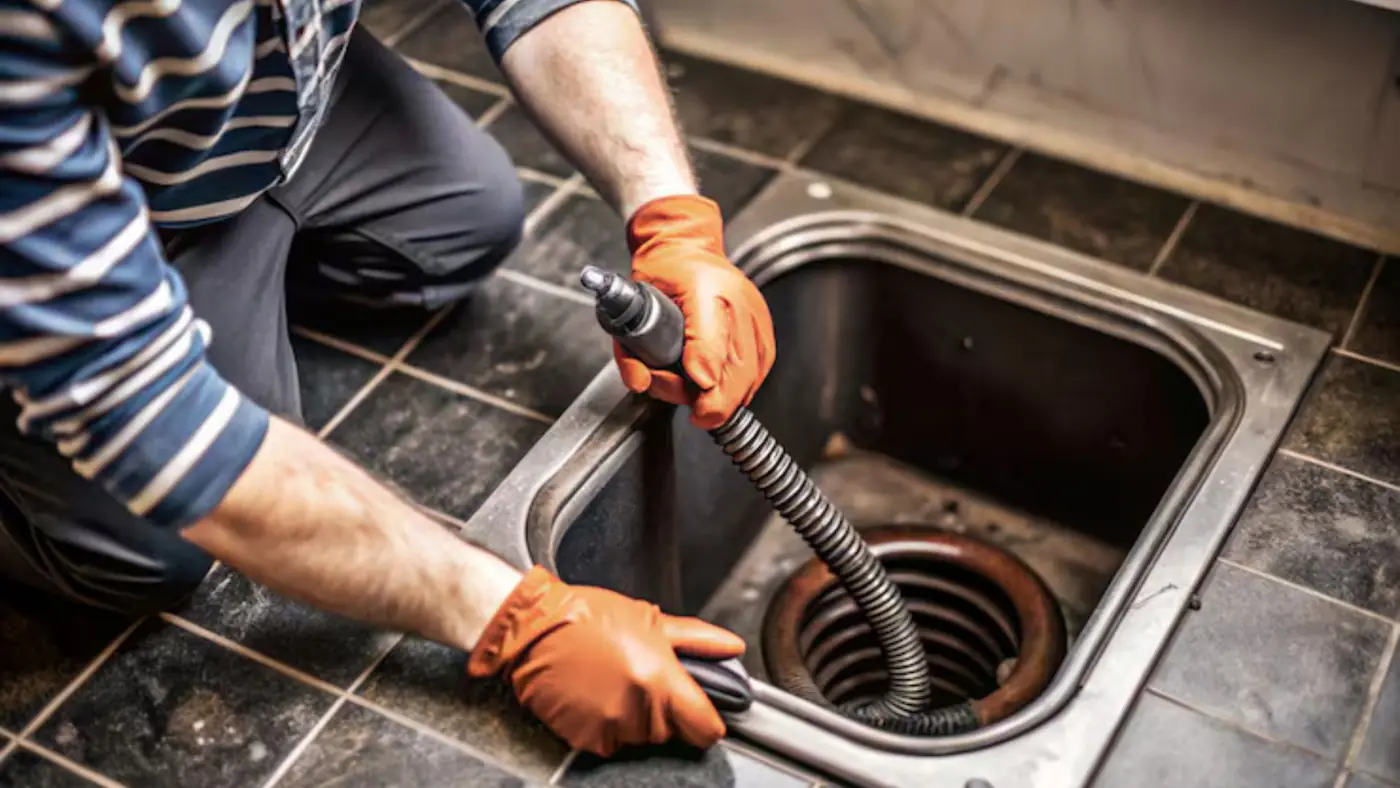
A backing-up drain at night: what to do first
If water is rising in a tub, a floor drain or a toilet, stop adding to it. Do not run the washer, the dishwasher or the shower. Every gallon you send down a blocked line has to go somewhere, and it usually comes up at the lowest fixture in the house.
Then call. A plumber can tell from a few questions whether you have a clog in one fixture or a stoppage in the main line, and that decides how fast the job needs to happen. Mention which fixtures are slow and which ones gurgle.
Fixture clog or main line problem?
The pattern tells you more than the single drain that is causing trouble. Here is how we read it over the phone.
Only one drain is slow
A single sink, tub or shower that drains slowly while everything else works is almost always a clog in that fixture or its short branch line. It is usually quick to clear.
Two or more drains are slow
When a bathroom sink and the tub both struggle, the blockage has moved past the individual traps. It is probably in the branch that serves that part of the house.
Gurgling or bubbling elsewhere
Flush a toilet and hear the shower drain bubble? Air and water are being pushed back through another opening. That points to the main line.
Water at a floor drain or lowest tub
Wastewater always finds the lowest opening. Water showing up in a basement floor drain or a ground-level shower is a main line warning that should not wait.
How we clear a blocked drain
We start with the least invasive tool that will do the job and move up only when the line tells us to.
- 1
Locate the blockage
We ask what is backing up, find the nearest cleanout and decide where to enter the line.
- 2
Clear with the right tool
A cable or drain machine handles most household clogs. Grease, scale and packed roots may need a cutting head or hydro jetting.
- 3
Check with a camera
When the cause is not obvious, a camera run shows whether the pipe is clear, cracked or holding roots.
- 4
Test and explain
We run water through every affected fixture, tell you what we found and what to avoid.
Water coming up right now?
Call and describe which drains are slow. We will tell you what to shut off while a plumber heads your way.
Which method fits which problem
Not every stoppage needs the same tool. This is the rough guide we use when we look at a drain.
| Problem | Usual method | Why |
|---|---|---|
| Hair or soap in a tub | Hand tool or small cable | The clog sits close to the fixture and breaks up easily. |
| Kitchen grease | Cable, then hot flush or jetting | Grease coats the pipe wall, so a cable alone can leave a narrow channel. |
| Main line roots | Cutting head, then camera | Roots return unless the pipe is also checked for cracks or gaps. |
| Repeated clogs in one line | Camera inspection | Something in the pipe, such as a sag or a bad joint, keeps catching debris. |
If the same drain keeps clogging, clearing it again is not a fix. A sewer camera inspection shows what is catching the debris.
What changes the price of a drain job
You get a clear price before work starts. These are the details that move it up or down.
Drains in Bothell homes
Bothell grew quickly after 1950, and many neighborhoods have homes built across several decades. A single house can have cast iron, clay, ABS and PVC in the waste lines, and each material holds debris differently.
The long wet season also pushes tree roots toward joints in older sewer laterals, especially where mature trees sit near the line. If the clog is deep in the yard, a sewer line cleaning visit with a camera is often the better call than another round of snaking.
Drain, trap and cleanout work follows the Uniform Plumbing Code (UPC) as adopted in Washington under WAC 51-56, so we leave access points the way the code expects.
Drain cleaning questions
Yes. Our emergency line is open 24 hours a day, every day. Call (425) 845-0257 and tell us which drains are backing up. We will give you a clear price before work starts.
We advise against it on a fully blocked drain. The liquid sits in the pipe, can burn skin if it splashes back, and makes the job harder to do safely. A mild clog that drains slowly is a different case.
Several fixtures slowing down at once, gurgling when you flush, or water at a floor drain all point to the main line. One slow sink usually means a local clog.
Not always. A simple tub clog does not need one. We use a camera when the cause is unclear, when clogs keep coming back or when the line runs a long way underground.
It depends on the clog. A cable clears a blockage. Jetting also scrubs grease and scale off the pipe wall. See our hydro jetting page for when each makes sense.
Keep grease out of the kitchen sink, use a hair catcher in showers and run hot water after washing dishes. Do not flush wipes, even ones labeled flushable.