Find out where the water is going
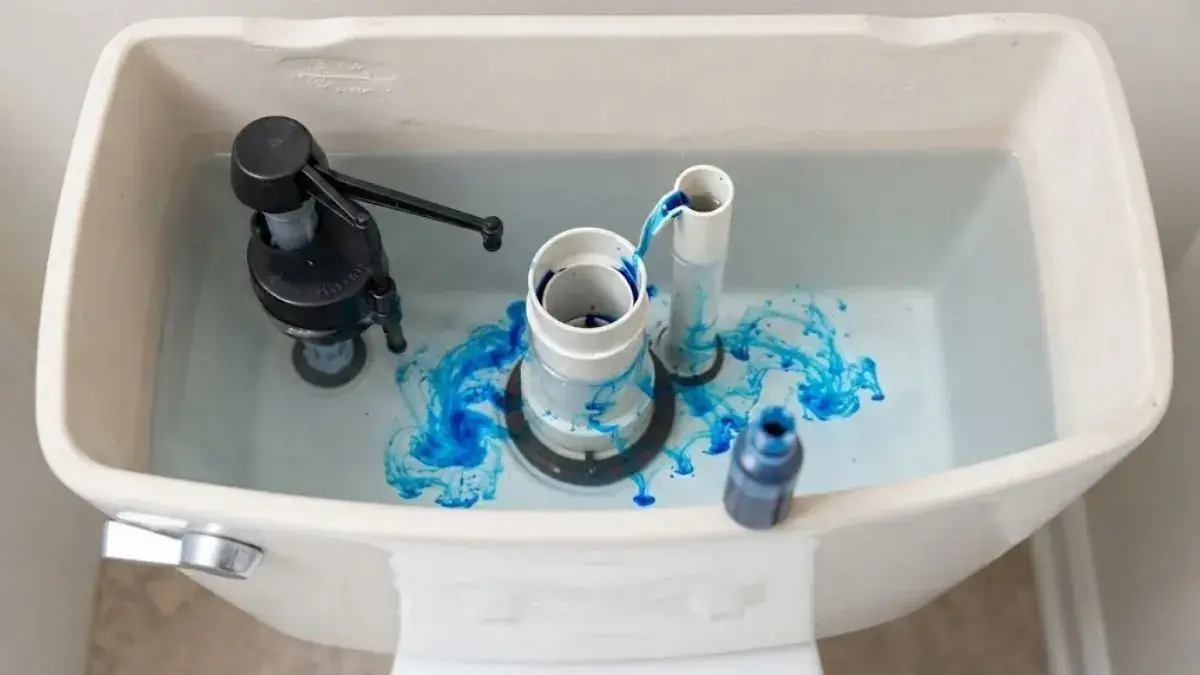
Remove the tank lid and look. If water is flowing into the overflow tube, the fill valve is not shutting off or the float is set too high. If the water level is fine but the tank slowly empties and the toilet refills on its own, the flapper is leaking into the bowl.
A dye test confirms the second case. Put a few drops of food coloring in the tank and do not flush. If color shows up in the bowl within ten or fifteen minutes, the flapper is leaking.
Fix it in four steps
- 1
Turn off the supply
Close the valve behind the toilet and flush to empty the tank.
- 2
Check the chain
A chain that is too short holds the flapper open, and one that is too long can get caught under it. Leave a little slack.
- 3
Replace the flapper
A new flapper of the same type costs little and fits most toilets. Match the size to your flush valve.
- 4
Adjust or replace the fill valve
Set the float so the water stops about an inch below the overflow tube. If it will not shut off, replace the valve.
What each symptom usually means
| What you see | Likely cause | Fix |
|---|---|---|
| Water flows into the overflow tube | Fill valve or float | Adjust float or replace valve |
| Dye appears in the bowl | Worn flapper | Replace flapper |
| Hissing for a long time after a flush | Fill valve slow to shut | Replace valve |
| Toilet refills by itself every so often | Slow flapper leak | Replace flapper |
| Water on the floor around the base | Wax ring or supply line | Call a plumber |
Still running after a new flapper?
Call and tell us what you see in the tank. We can help you decide whether it is a part or a repair.
Why a running toilet matters on the water bill
A toilet leak can waste a lot of water without a sound. You may not hear it at all, but your water meter will. If your bill rises and your habits have not changed, a toilet is one of the first things to check.
Turn off every tap, then read the meter or watch its small low-flow indicator. If it moves, water is leaking somewhere after the meter. The dye test finds toilet leaks, and if the toilet is not the cause, see our guide to a hidden leak trace.
When to stop DIY and call
Some problems need a plumber. Water at the base of the toilet means a wax ring or supply line problem. A cracked tank or bowl cannot be repaired. A toilet that runs after you replace both the flapper and the fill valve may have a worn flush valve seat.
If the toilet is old and has needed repeated repairs, replacement may cost less than another fix. We can advise on that during a visit to toilet repair.
Parts that wear out and how long they last
The flapper is a rubber part that sits in water all day. It can harden, warp or collect mineral film within a few years, and chemical tank tablets speed that up. The fill valve has seals and a float that also wear. These are low-cost parts, so replace them rather than nursing a worn one.
When you buy a flapper, take the old one to the store or note the brand and flush valve size. A flapper that does not match the valve will leak even when new.
A slow leak you cannot hear
Some leaks are silent. Water seeps past the flapper into the bowl so slowly that you never hear the toilet refill. The only sign is a higher water bill or a faint ripple in the bowl. Check each toilet with the dye test once a year, especially in a house with older fixtures.
If a toilet fails the dye test and a new flapper does not fix it, the flush valve seat may be pitted. That repair is quick for a plumber and often means replacing the flush valve or the toilet.
Quick checklist before you call
- Dye test done and result noted
- Chain length checked for slack
- Flapper replaced with the matching type
- Float or fill valve adjusted so water stops below the overflow tube
- Supply line and base dry after a flush
- Meter checked with all taps off
Running toilets and the Bothell water bill
The City of Bothell serves about 8,500 households and businesses, and four water districts serve other parts of the area. If you are on a city account, the City Utility Billing office handles leak and excess-use reports. If you are on a district, ask the district. Either way, fixing the toilet first is the easiest step.
Homeowners are responsible for plumbing beyond the meter. If the toilet is not the cause of a high bill, the next suspect is the service line, see water service line repair. We also serve Kenmore and nearby towns. See our service areas.
Running toilet questions
It varies from a small trickle to a steady stream. Even a slow leak adds up across a month, which is why it shows up on a bill. A meter reading with all taps off tells you if there is a leak.
If you are on a City of Bothell account, the Utility Billing office handles leak and excess-use reports. If a water district serves your address, contact that district. Check who serves your site.
If the toilet is old, cracked or has repeated problems, yes. A new model can use less water per flush than an old one.
A slow flapper leak lets the tank drop until the fill valve refills it. Replace the flapper.
Bothell water is soft according to the City, so mineral buildup is less common here than in hard-water areas. Parts still wear out from age and chemicals.
They can shorten the life of rubber parts. If you use them, check the flapper more often.