
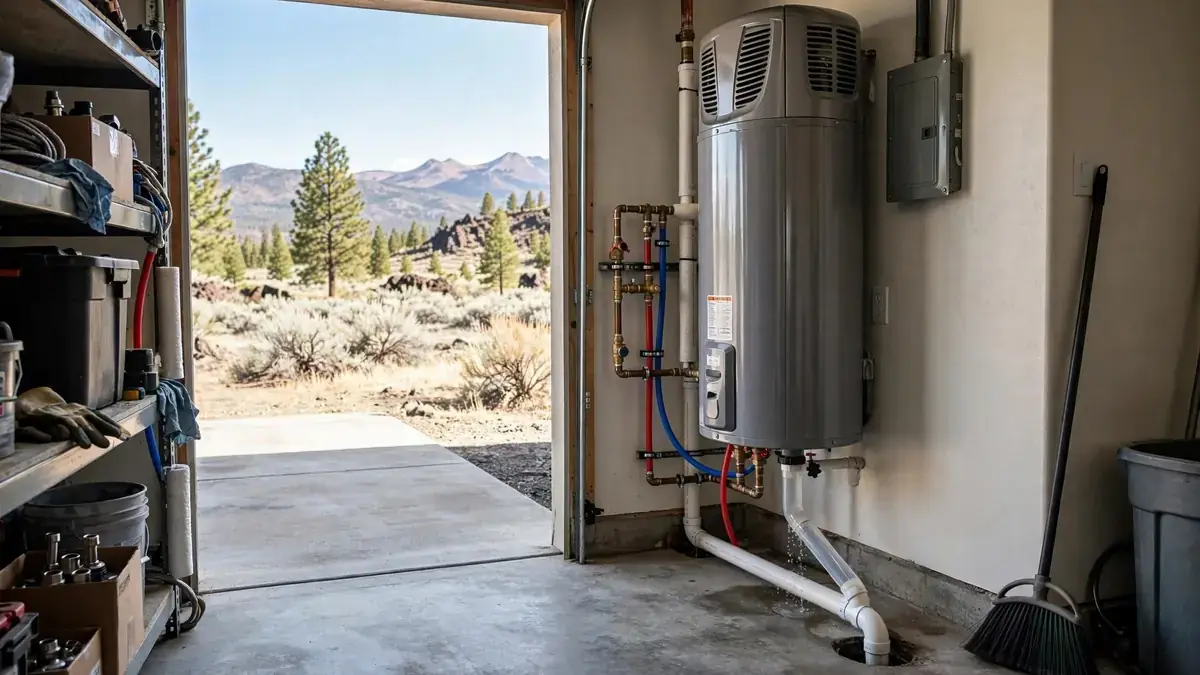
How a heat pump water heater works
A standard electric tank heats water with a resistance element, which turns electricity directly into heat. A hybrid heat pump unit works more like a refrigerator in reverse. It pulls heat from the air around the tank and moves it into the water, then uses a backup element when demand is high.
Because it moves heat instead of making it, it can be two to three times as efficient as a plain electric tank. That is where the lower running cost comes from. The unit also cools and dries the air around it, which is a bonus in a warm garage and a drawback in a small closet.
What the install needs
The unit needs open space, because it breathes the surrounding air. Manufacturers list a minimum room size, so read the manual for the model you are considering. A cramped closet can starve the unit of air and cool the space around it.
It also needs a drain for the condensate it produces, a 240 volt circuit like a standard electric tank and a spot where the fan noise will not bother anyone. Hybrid tanks are often taller than a standard tank, so check ceiling height. These are the details that decide whether the install is simple or expensive.
Heat pump or standard tank
Neither is better in every house. Here is how the trade-offs line up.
Hybrid heat pump
- Uses much less electricity to heat water
- Needs open space and air flow
- Needs a condensate drain
- Costs more up front, may have rebates to check
Standard tank
- Lower purchase price
- Fits tight closets and garages
- No condensate drain needed
- Uses more electricity on electric models
Want a site check before you decide?
Call and tell us where the heater would go. We can look at space, drain and electrical before you buy.
Where a heat pump unit works well and where it struggles
| Location | How it tends to work | Watch for |
|---|---|---|
| Large garage | Good air supply and room to drain | Very cold nights lower efficiency |
| Basement or utility room | Good if there is open volume | Damp rooms need a reliable drain |
| Small closet | Often poor | Needs ducting or vents for air |
| Living space | Possible with ducting | Fan noise and cool air |
What it means for your running costs
The savings depend on what you pay now, how much hot water you use and where the unit sits. A household that uses a lot of hot water gets more benefit than a single person who showers once a day. If your current heater is gas, switching to a heat pump changes the fuel you pay for, which needs a closer comparison.
We recommend asking your electric utility about rebates before you buy. Programs change, so confirm what is available for your address rather than relying on a general claim.
Noise, air and comfort around the unit
A heat pump water heater has a fan and a compressor, so it makes a steady low hum while it runs. In a garage or basement that is rarely a problem. Next to a bedroom wall it can be. Choose the location with the sound in mind, not only the plumbing.
The unit also exhausts cool, dry air. In a warm room that is a small benefit. In a small space it can make the area noticeably colder. Some homeowners duct the intake and exhaust to the outside or to another room, which solves the problem but adds work.
Operating modes and what they cost
Most hybrid units offer several modes. Heat pump only is the most efficient but the slowest to recover. Hybrid mode uses the heat pump and adds the backup element when demand is high. Electric only runs like a standard tank and is the most expensive to run.
A household that runs out of hot water in heat pump mode can switch to hybrid mode for busy mornings. Ask the installer to explain the controls and to set the unit up for how your family actually uses hot water.
A short checklist before you buy
- Measure the ceiling height and the floor space where the unit would stand
- Confirm there is a 240 volt circuit or room for one in the panel
- Find the nearest floor drain or a way to route the condensate line
- Check the manual for the minimum room volume and air flow
- Ask your electric utility about current rebates for your address
- Decide where the cool exhaust air can go
Heat pump water heaters in Bothell homes
Bothell has a cool, wet climate, with mild summers and a long damp season. A garage that stays between cool and moderate year round suits a heat pump unit well. A garage that gets very cold in a winter snap is a poorer fit, because the unit works harder when the air is cold.
Replacing a water heater in Bothell requires a permit according to the City Permit Center, and that applies to a heat pump unit too. If your current tank has failed, see our water heater replacement page, and for a planned upgrade see water heater installation. We also serve Kenmore and nearby towns listed on our service areas page.
Heat pump water heater questions
Generally yes. The unit works well in a space that stays in a moderate range. Very cold air reduces efficiency, so an unheated garage that freezes is a poorer choice than a conditioned or sheltered space.
It has a fan and a compressor, and it sounds like a small dehumidifier. Place it away from bedrooms and living areas if noise would bother you.
It can, but it needs a 240 volt circuit and a condensate drain, and your gas savings become electric costs. We look at both before recommending a swap.
Replacing a water heater in Bothell requires a permit according to the City Permit Center. We tell you what applies to your job.
Life expectancy is comparable to a good tank when maintained. Check the warranty terms for the compressor and the tank.
Ask us to look at ducting or a different location. A small closet without air flow is the most common reason a heat pump unit performs poorly.