
Why a fixed schedule does not work
You may hear advice to clean your sewer every year or every few years. The truth is that lines differ. A new plastic lateral with no roots may never need cleaning. An old clay lateral next to a large tree may need it every year.
Cleaning on a schedule that does not match the pipe can waste money. Waiting for a backup can cost more. The middle path is to watch the signs and use a camera to know what is happening.
Factors that decide how often
- Pipe material: clay and cast iron take roots and scale, plastic less so
- Trees and shrubs close to the line
- A history of backups or slow drains
- Kitchen habits, especially grease
- Age and condition of joints
- Whether a camera has found a belly, crack or offset
Match the plan to the pipe
| Your situation | Reasonable plan |
|---|---|
| No problems, newer plastic pipe | No routine cleaning, act on signs |
| One past backup, cause unknown | Camera inspection to find the cause |
| Roots found on camera | Clean, then consider sealing the joint or lining |
| Grease buildup | Hydro jetting and kitchen habit changes |
| Repeat backups | Camera and discuss repair or replacement |
Not sure what your line needs?
Call and tell us about your trees, pipe age and any backups. A camera visit gives you real facts.
What a camera visit tells you
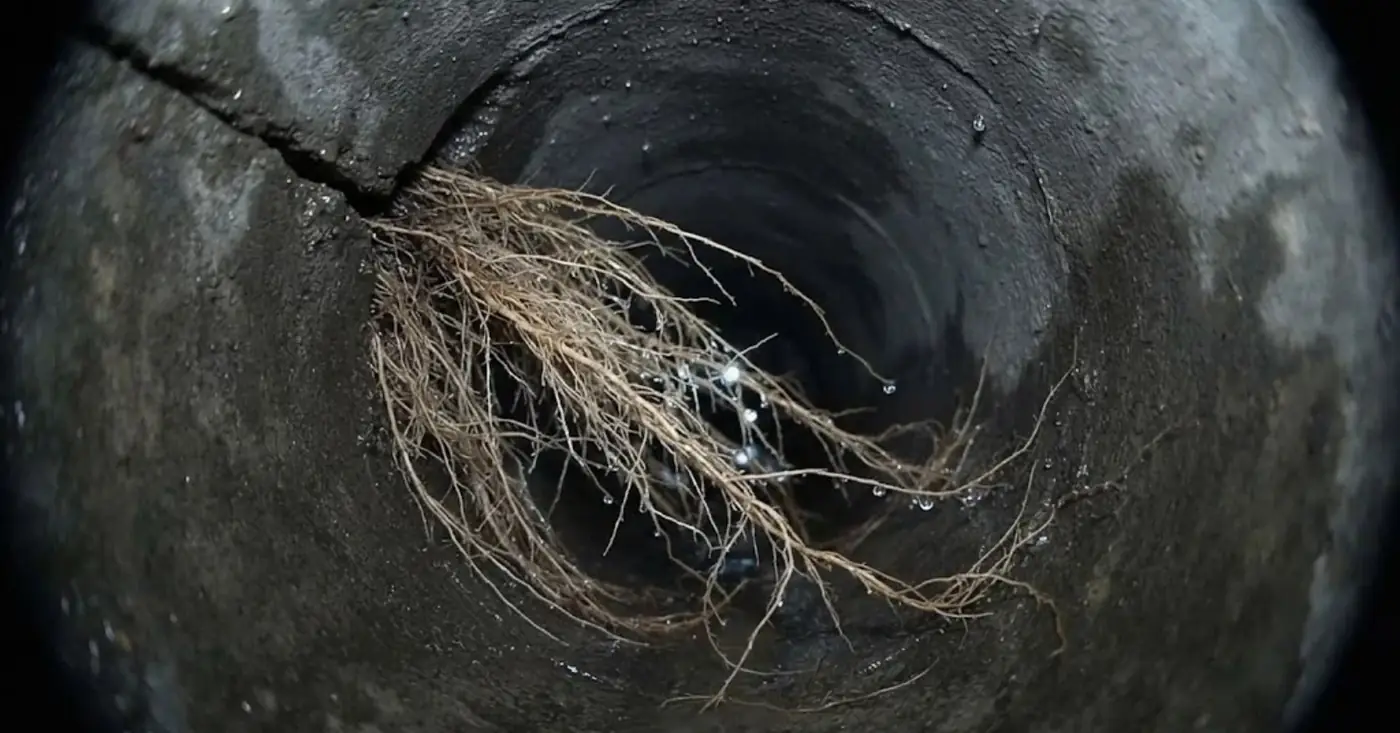
A camera shows whether the pipe is clear, rooted, cracked or sagging. It turns a guess into a decision. You may learn the line is fine, or that a joint needs sealing before the next wet season.
It also gives you footage for planning repairs. See sewer inspection for how it works.
Signs not to ignore
Slow drains in several fixtures, gurgling, a smell near the cleanout or water at a floor drain are all reasons to act. Do not wait for a full backup. Early cleaning is simpler and cheaper than cleanup after sewage floods a room.
If you see sewage, stop using water and call. See sewer line cleaning for what we do.
What cleaning does and does not fix
Cleaning removes what is in the pipe. It does not fix a crack, a belly or an open joint. If the cause is damage, the blockage returns. That is why we pair cleaning with a camera when roots or repeat clogs are involved.
A cleaned line with a sealed joint can stay clear for years. A cleaned line with the same open joint may be rooted again by the next wet season.
Preparing your yard and tree plan
If you are planting new trees, keep them away from the sewer path and choose species with less aggressive roots. If you already have a large tree near the line, a camera check tells you whether it is a problem now. Removing a tree is a big decision, so get the facts first.
If a project like a driveway or an addition is coming, scope the lateral before it starts. It is far cheaper to fix a line before it is under new concrete.
A sewer care checklist
- Know where your cleanout is
- Keep grease and wipes out of drains
- Watch for slow drains in several fixtures
- Keep trees and big shrubs away from the sewer path
- Scope the line before major yard work
- Keep camera footage for future reference
Bothell trees, soil and sewer service
Bothell has many mature trees, and the wet season keeps the soil damp, which encourages roots. Older neighborhoods with clay laterals near big trees are the most likely to need attention. Newer subdivisions around Canyon Park and North Creek usually have plastic pipe that resists roots.
Sewer service comes from the City of Bothell or Northshore Utility District, depending on the address, and both connect to the King County regional system. The utility owns the public main, and you own the pipe on your lot. We serve Kenmore and nearby towns on our service areas page.
Cleanouts and drain slope fall under the Uniform Plumbing Code (UPC) as adopted in WAC 51-56, and a code-compliant cleanout makes every later cleaning easier.
Sewer cleaning frequency questions
Not necessarily. Clean when there are signs of trouble or a known history of roots or grease. A camera visit shows whether it is needed.
Roots are a leading cause in older lines, especially clay. Grease and wipes cause many others.
It is usually a capped pipe near the house or in the yard. If you cannot find one, tell us and we will look.
The utility owns the public main. You are generally responsible for the lateral on your property. Check with the utility serving your address.
Done properly, no. We use a camera first to check the pipe condition.
Keep grease out of drains and watch for signs. A camera check before buying a house or doing big yard work is a good idea.