
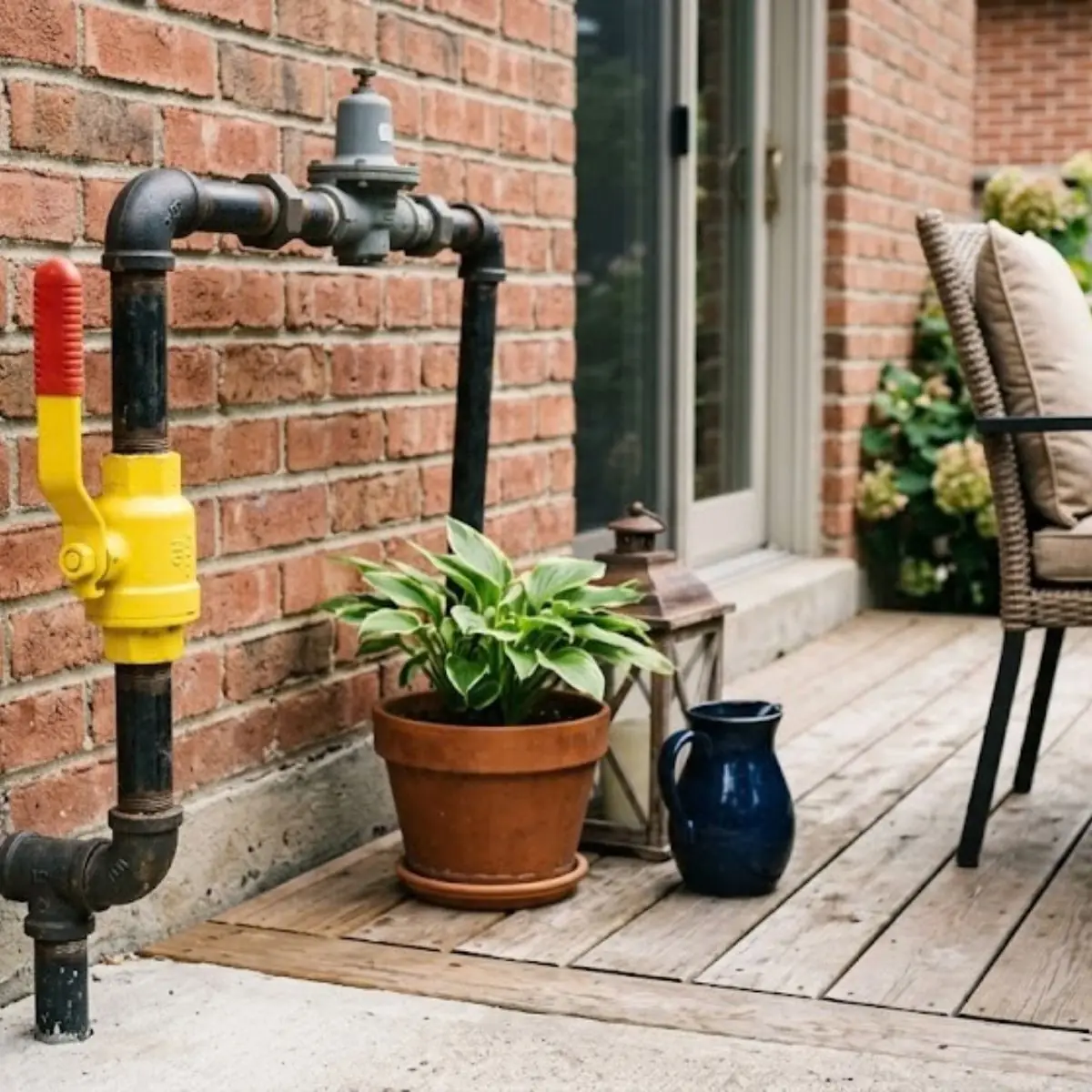
Safety comes first
Gas appliances need respect. A leak at a connection can cause fire, and a poor vent can let carbon monoxide into the house. Install a carbon monoxide alarm near sleeping areas and test it. If you smell gas, do not turn on lights or use a phone inside. Leave and call 911 and your gas utility from outside.
Gas connections and venting should be done by a licensed professional and inspected under a permit.
What the install requires
- 1
Check gas capacity
Add up the load of the new unit and your other gas appliances. Compare it to the capacity of the line and meter.
- 2
Choose the vent type
Condensing units use plastic venting. Non-condensing units use metal venting with different clearances.
- 3
Plan combustion air
The unit needs air to burn fuel. Some models draw it from outside through a sealed vent.
- 4
Set up the condensate drain
Condensing units produce acidic water that needs a safe drain, often with a neutralizer.
- 5
Connect water and gas
Isolation valves on the water side, a shutoff and sediment trap on the gas side.
- 6
Test and inspect
Check for leaks, verify combustion, and have the permit inspection done.
Condensing and non-condensing compared
| Type | Venting | Other needs |
|---|---|---|
| Condensing | Plastic pipe, can run in tighter spaces | Condensate drain and neutralizer |
| Non-condensing | Stainless metal vent, hotter exhaust | Larger clearances, no condensate drain |
Want your gas line checked?
Call and we can talk through your setup before you buy a unit.
Gas line sizing
A tankless unit can draw many times the gas of a tank heater. If the line was sized for a tank, it may be too small. Upsizing can mean new pipe from the meter. Your gas utility can tell you about the meter.
Ask for the size check in writing. An undersized line causes error codes, poor output and nuisance shutdowns.
Venting rules
Every unit has limits on vent length, number of elbows and where the vent can terminate. Terminations must be clear of windows, doors and air intakes. A vent that does not follow the manual can fail inspection and create a hazard.
We read the manual and plan the route before any cutting. See tankless water heater for service and flushing after the install.
Combustion air and the room it sits in
A gas unit needs a steady supply of air to burn fuel cleanly. In a sealed closet it can starve and run poorly. Direct-vent models pull air from outside through a sealed pipe, which avoids the issue. Open-vent models need louvered doors or air openings that meet code.
Tell the installer if the unit is going in a tight space, and expect a plan for air supply in the written scope.
Why annual service matters on gas units
A gas tankless unit has burners, sensors and a heat exchanger that should be checked. Flushing the exchanger removes scale. Cleaning the burner and checking the vent catch problems early. Annual service is also a good time to test the carbon monoxide alarms.
Keep the manual and permit copy together with the service record. They help if you sell the house.
Gas tankless safety checklist
- Carbon monoxide alarm near sleeping areas
- Gas shutoff within reach
- Sediment trap on the gas line
- Vent terminated clear of openings
- Combustion air supply confirmed
- Leak test on all gas joints
Gas tankless installs in Bothell
Gas service in the area is provided by Puget Sound Energy in many addresses, but not all homes have natural gas. Confirm service at your address before you plan a gas unit. If you are on electric only, an electric or heat pump unit may be the better path.
The City of Bothell Permit Center says replacing a water heater requires a permit, so expect one for a gas tankless install. The Washington plumbing code, based on the Uniform Plumbing Code with state amendments, governs the work. See water heater installation for standard tanks. We serve Kenmore and nearby towns on our service areas page.
Gas tankless questions
Replacing a water heater requires a permit according to the City Permit Center. A tankless gas install is a bigger change, so expect one.
Not every address has gas. Check with your gas utility. If you do not have gas, consider electric or heat pump options.
Usually not. Tankless units need different venting, and the old flue is often the wrong size or type.
Yes, for any home with a gas appliance. Place alarms near sleeping areas and test them.
It makes a fan and burner noise when running. Place it away from bedrooms where possible.
We do. Ask about flushing and annual checks when you book.